After one month, it appeared 13.9% of the remdesivir patients had died compared to 12.8% of patients in the control arm. The difference was not statistically significant.STAT
Biotech
New data on Gilead’s remdesivir, released by accident, show no benefit for coronavirus patients. Company still sees reason for hopeBy Ed Silverman, Adam Feuerstein, and Matthew Herper
April 23, 2020
Despite its manufacturer’s near desperate efforts, the antiviral remdesivir predictably failed its first clinical trial in treating COVID-19 (SARS-CoV=2).
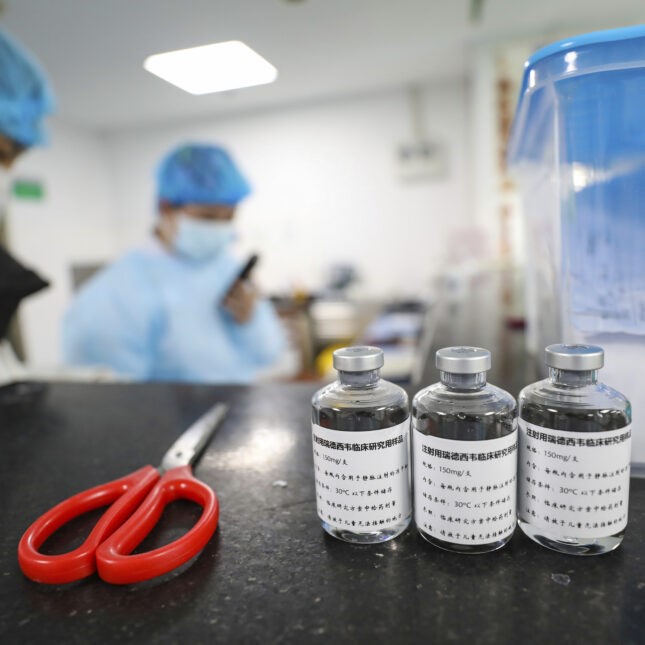
Bottles of remdesivir in a hospital for Covid-19 patients in Wuhan, China. FeatureChina via AP
The antiviral medicine remdesivir from Gilead Sciences failed to speed the improvement of patients with Covid-19 or prevent them from dying, according to results from this long-awaited clinical trial conducted in China. Gilead, however, said the data suggest a “potential benefit.”
A summary of the study results was inadvertently posted to the website of the World Health Organization and seen by STAT on Thursday, but then removed.
“A draft manuscript was provided by the authors to WHO and inadvertently posted on the website and taken down as soon as the mistake was noticed. The manuscript is now undergoing peer review and we are waiting for a final version before WHO comments on it,” said WHO spokesperson Daniela Bagozzi.
Gilead spokesperson Amy Flood tried to defend the failure by saying that the company believes “the post included inappropriate characterization of the study.” Because the study was stopped early because it had too few patients, she claimed, it cannot “enable statistically meaningful conclusions.” However, she said, attempting to spin the failure, “trends in the data suggest a potential benefit for remdesivir, particularly among patients treated early in disease.”
This data will be closely scrutinized, but is also likely imperfect. The study was terminated prematurely, which could have affected the results. The context that would be provided by a full manuscript is missing, and the data have not been reviewed as normally occurs before publication.
According to the summary of the China study, remdesivir was “not associated with a difference in time to clinical improvement” compared to a standard of care control. After one month, it appeared 13.9% of the remdesivir patients had died compared to 12.8% of patients in the control arm. The difference was not statistically significant.