Jesus it's not as bad as this Flat Earth Wiki article about the colour of a Lunar Eclipse...
"The Lunar Eclipse is red because the light of the sun is shining through the edges of the Shadow Object which passes between the sun and moon during a Lunar Eclipse. The red tint occurs because the outer layers of the Shadow Object are not sufficiently dense. The Sun's light is powerful enough to shine through the outer layers of the Shadow Object, just as a flashlight is powerful enough to shine through your hand when you put it right up against your palm."
Talk about fudging together an explanation! How can they possibly draw parallels to shining a flashlight through your hand? That's a fleshy organic material with red blood cells! Is that what their "Shadow Object" is made of? If so, that's frankly, terrifying.
I would also love to know how in a Solar Eclipse, if the moon and sun are both identical sizes (32 miles in diameter I believe) then for one to obscure the other but still appear to be the same size they would have to be moving through one another... or at least very close...
Also, keep in mind a few things about a Moon that is ~3000/whatever mi up:
1) The Moon has to be flat because if it was a sphere or semi-sphere, people at different locations on Earth would see it totally differently.
2) A problem is that the Moon (29′20″ –
34′6″) can be larger than the Sun (31′31″ – 32′33″) in the sky (
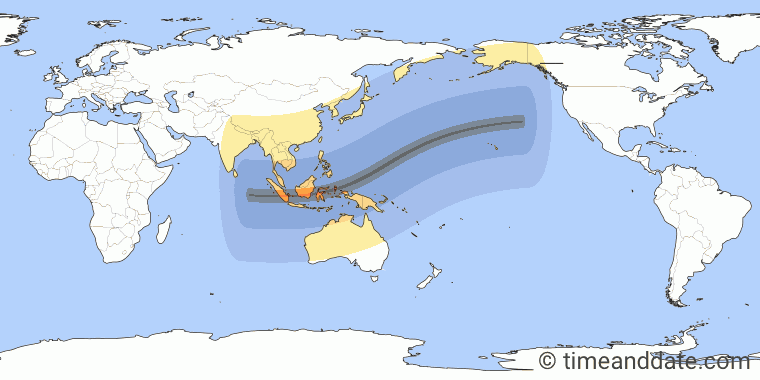
https://en.wikipedia.org/wiki/Angular_diameter). How can it make such a small swath of totality (Moon totally blocking the Sun - the darkest band/line below) on the Earth?
(
http://www.timeanddate.com/eclipse/solar/2016-march-9)
Why doesn't it darken the WHOLE Flat Earth?3) The RET explanation
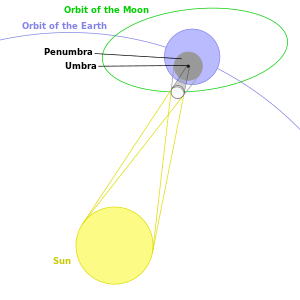
includes the sizes and distances of the Sun and Moon that DO account for what we see - AND MOST IMPORTANTLY, we can
PREDICT MONTHS/YEARS in advance what the eclipses will look like (total, annular, partial) and where on Earth they will be and how long they will last. The FEF - nothing, nada, zippo.

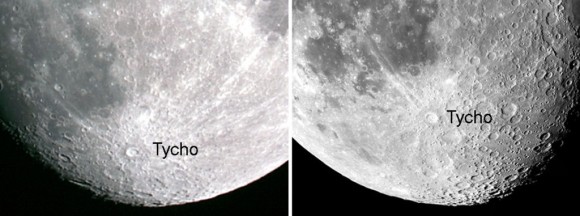
4) Per the thread topic, another problem is Lunar Libration. We only see 50% of the Moon at a time but can see up to 59% of the Moon's surface because of its 5.1° orbit inclination, 1.5° axis tilt, distance from Earth and location of observer on Earth (Norway/New Zealand and moonrise/moonset). So how and why does the "skin"/surface of the Moon stretch around a disk like that on a FEF Moon disk?
(
http://earthsky.org/space/how-much-of-the-moon-can-we-see-from-earth-lunar-libration)