If you want the truth, check
http://www.
physics4Penguin_Overlords.com/files/motion_gravity.html
Anyway, OP-wise, the problem isn't just solving equations, it's explaining them in a physical sense. Mathematically, you can take any point to be stationary and take everything to be moving around it, but scientifically you need to be able to explain where that motion comes from. In the heliocentric case, we have gravity.
In the geocentric case, we ran into a problem with the movement of the other planets:
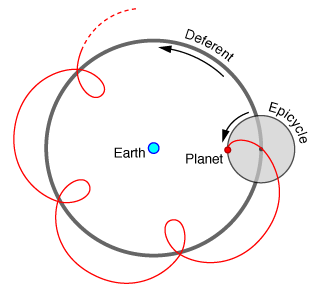
That's the path they appeared to take if the Earth was stationary. In the heliocentric model, it's explained by all the planets moving essentially in concentric circles (to simplify), and occasionally passing one another.
Trying to make a lunar-centric model would no doubt run in to something similar. You can crunch the numbers for it theoretically just fine, but can you explain
why any of it happens?