Last year, out of about 500 *Passiflora edulis* flowers on 10 vines in my garden, not a single one turned into fruit. I figured out the problem: it was the bees. Last year there were no bees on the flowers because they don't smell. But this year, bee activity is very much present. I think my plants have learned what attracts bees and are now producing it. If any *Passiflora edulis* sets fruit, I'll let you know.
This year, in my garden, alongside countless marigolds, cosmos, zinnias, and sunflowers that I grew from seeds from last year's plants, I also have a few crystalline iceplant. This plant interests me more than the others because this is my first year experimenting with it. I'm also thinking of using it to cover a sloping area in my garden. This is it from internet:
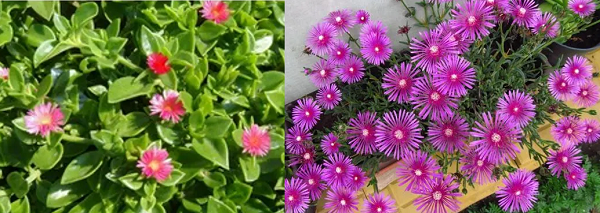
The characteristic of this flower is that it invades the area it spreads over and gives almost no chance to weeds. Since its natural habitat is Africa, it is drought-resistant and has a devastating competitive strategy: it stores salt from the soil in its leaves, depriving other plants of nutrients. In Africa, it germinates in winter and blooms in spring, but here in a milder climate, its growth cycle follows that of other flowers — germinating in spring and blooming in summer. When I plant it on the slope, I will first try sowing it in autumn and see if it survives the winter. My aim is to start its natural cycle when other plants are dying, thereby eliminating competition entirely. I will report the results at the end of summer.
And the flower's appearance is not bad at all — in fact, it has a shape that none of my other flowers have, and in that respect, it will add color to my garden.