in fact there's a scientific principle called the Heisenberg Uncertainty Principle, that says you never have any idea where atomic and subatomic matter is at any given second because of velocity and location
You sure do love spouting pure delusional BS.
That principle states there is an uncertainty associated with it, and that you can never get a perfect measurement.
That is drastically different to no idea.
A simple example is an electron bound to an atom. We can easily narrow it down to the electron cloud, but we can't pinpoint the location inside it.
Conversely, you have no idea at all, because you are just making up BS to try and prop up a failure.
I explained multiple times what causes the arc phases.
No, you didn't.
You gave lame excuses which failed to explain anything.
Excuses which were quickly exposed to be pure garbage.
You also provided contradictory explanations.
Relative angles of the sun and moon against each other. The sun casts light on the moon. How difficult is this to understand? When the sun is not at a good angle to cast light on the moon it is new. When it is at a perfect angle, it's full. Between that, it has phases.
The problem is how it goes between the phases, how long it stays in the phases and the specific shapes observed.
If you want to have your sun as a spotlight illuminated the moon, then you have a quick transition from new to full as the moon enters that spotlight, with it remaining a new moon while it is outside the spotlight and remaining full while inside. But the biggest issue is how it changes between.
With this delusional BS you would expect it to be like 2 overlapping circles. A partially illuminated moon (i.e. when we observe a crescent) would instead look like this:
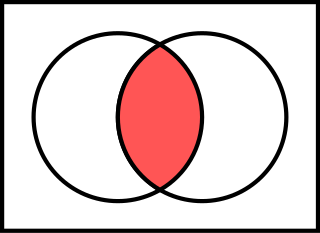
That is NOT a crescent.
It also wouldn't produce a quarter moon, or a gibbous moon.
There is no way to have a flat moon simply entering or exiting a spotlight to produce these different illumination patterns.
The closest you have come to explaining it is when you just took the RE explanation, that the moon is round, and the phases are based upon the angular separation between the sun and the observer (at the moon).
But for a close moon that would make the phases different for different locations on Earth.
Just as the two can be in alignment on opposite sides of a person (where you have to turn around to look at them), they can line up within the same sky. Lunar eclipse is when the sun at a distance removed from sight moves into the path of a full moon. Solar eclipse is when a new moon moves into the path of the sun while it is within sight
And this is just a collection of nonsense.
It doesn't explain anything.
First remember that you have declared that these are projections, not actually objects. So are you saying the projections are doing this? Or are there some physical objects that are being projected?
Additionally, remember that you have declared that these objects are the same distance away. That means if they move into each others path they collide. Conversely, you have them switching which is closer.
It also has other massive problems, if the sun is out of sight, has does it move into the path of the moon which is in sight to create a solar eclipse?
If the sun is moving into the path, why don't we see the sun? It should make it a lot brighter, not darker.
Especially when we can observe the start of a lunar eclipse with the sun and moon both in the sky just above the horizon, with them clearly in opposite sides of the sky?
I don't know what the umbra is. And I don't care, before you start to tell me. It's irrelevant to everything.
It is quite relevant to an eclipse.
In short, it is the region of totality, where the obstructing object blocks out the entirety of the light source.
But of course you don't care, as it is something you can't explain, so you want to reject that part of reality to pretend your delusional garbage is fine.
They can't.
While the entire planet cannot see the moon at once, around 50% of it can.
And these can be people in drastically different locations.
But yet again, you just avoid the issue.
Why can people separated by massive distances see the same phase of the moon, and why does the phase not change significantly over the course of a day for a single observer?
These are things you can't explain. But as you can't explain the phases, that isn't surprising.
yes I explained the phases above.
No, you didn't.
You provided a pathetic excuse to avoid explaining it.
The garbage you have provided fails to explain anything.
You think you can actually get around using a globe to navigate.
You typically wouldn't use a physical globe.
Instead you either use projections of it, with known distortions, or you use a computer model of a globe.
Btw, have you ever really looked at this symbol?
Yes, it is a north pole, azimuthal equidistant projection.
It means you don't have any country at the centre, or the top.
It is not a FE map.
Now again, care to explain the phases of the moon, in detail, to clearly explain how the crescent shape is produced, along with the other shapes of the phases, and how long they are observed for?