Questions from a pilot.

  • 40 Replies
  • 11628 Views
?

Bilbobaggins

  • 114
  • +0/-0
Re: Questions from a pilot.
« Reply #30 on: December 12, 2012, 04:52:04 PM »
The airliner with the greatest range currently in operation is a Boeing 777 variant with an advertised range of 17,000km. 

The Great Circle distance between Sydney and Buenos Aires is 11,700km.   

I wonder if there are any Flat Earthers in Australia?  It's easy for someone in the Northern Hemisphere to ignorantly claim these vast distances in the South because they've likely never been there..sort of like the Weekly World News would claim "dog-boy" existed in Outer Mongolia...but what for someone who lives there and travels between, say, Perth and Capetown?  This would not be possible with today's aircraft according to the FE map but folks do it every day in about 11 hours.

?

Thork

Re: Questions from a pilot.
« Reply #31 on: December 13, 2012, 07:09:22 AM »
Flight times in the Southern Hemisphere. Yawn. ::)

How can you calculate an A to B distance when pilots are flying approach plates like these?
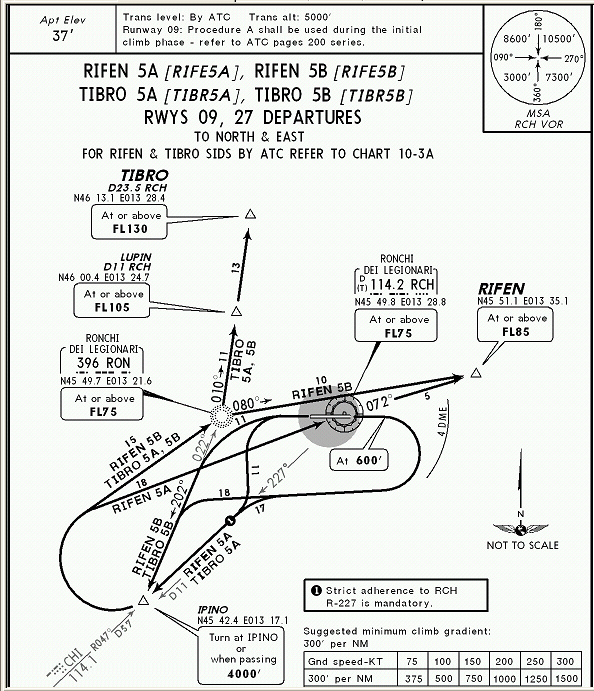
Using enroute 'highways' like these?
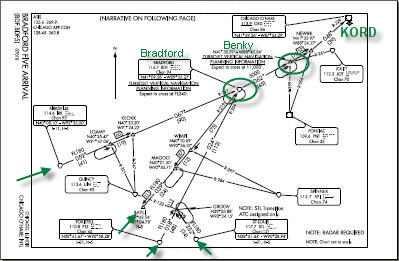
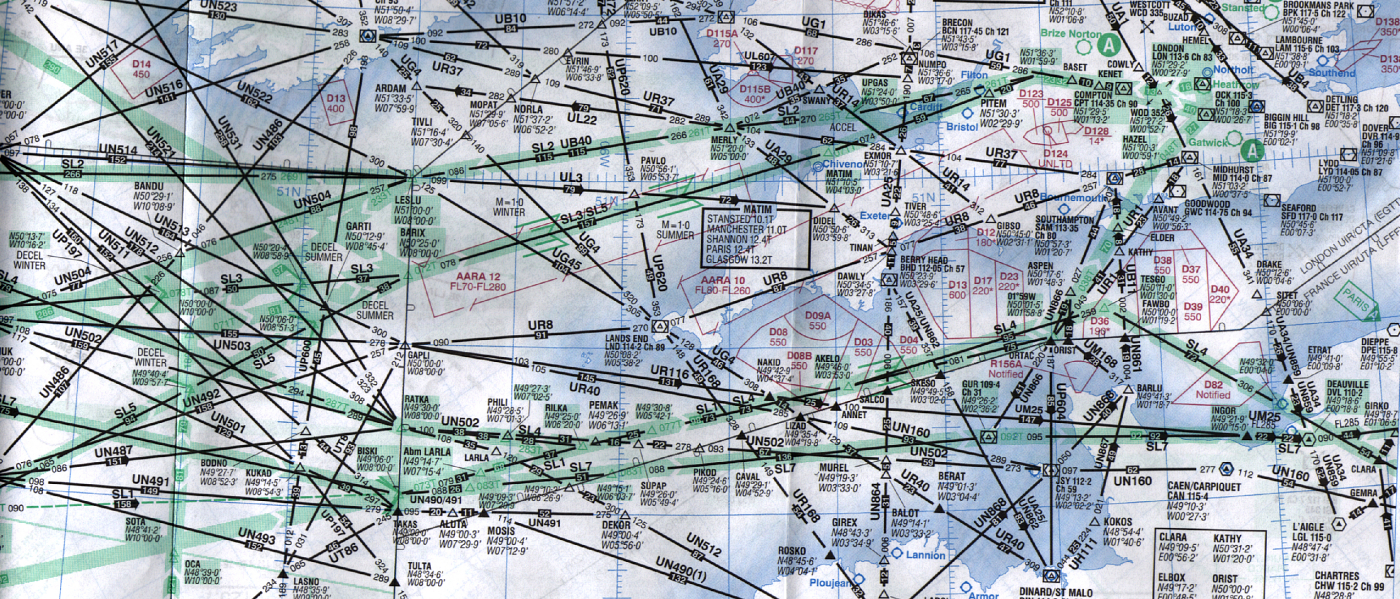
Joining non direct highways like these?


You do not fly direct. You follow the route you are given which the controllers choose and change for you based on traffic they already have.

If the wind is from a different direction your approach could be a huge dog leg to the other side of the airport to get you in line with all the other traffic.

Jet streams, wind, flight levels, ambient air conditions, payload.

Its total nonsense. There's so much room for wiggle that pilots just punch whatever into the FMS and go back to texting their divorce lawyers. As for flight time, it takes as long as it takes depending on how much the controller wants to mess you around and a myriad of other variables.
« Last Edit: December 13, 2012, 07:13:04 AM by Thork »

?

Bilbobaggins

  • 114
  • +0/-0
Re: Questions from a pilot.
« Reply #32 on: December 13, 2012, 07:30:27 AM »
Your chart examples are acurate and Flying from A to B is never a straight shot.  The route is usually a series of legs with nav aids or nav fixes between but generally goes in one directon.  There is also weather and traffic avoidance that might alter the route temporarily.

But the mileage difference between a straight line and the actual route flown is very minor.  For example, a straight line between my home airport and New York is 2175nm.  The actual flying distance might be 2225nm.  This difference will add about 10 minutes to a 5 hour flight.  Winds at altitude effect the flight time much more but will typically change things by <10%.

The flight time is never a surprise.  An accurate flight plan is calculated prior to departure and takes into account the wind and route.  This same 5 hour trip will nearly always end within +\- 2 minutes from what is expected that day.


*

Tom Bishop

  • Flat Earth Believer
  • 18033
  • +6/-9
Re: Questions from a pilot.
« Reply #33 on: December 13, 2012, 07:32:18 AM »
Your chart examples are acurate and Flying from A to B is never a straight shot.  The route is usually a series of legs with nav aids or nav fixes between but generally goes in one directon.  There is also weather and traffic avoidance that might alter the route temporarily.

But the mileage difference between a straight line and the actual route flown is very minor.  For example, a straight line between my home airport and New York is 2175nm.  The actual flying distance might be 2225nm.  This difference will add about 10 minutes to a 5 hour flight.  Winds at altitude effect the flight time much more but will typically change things by <10%.

The flight time is never a surprise.  An accurate flight plan is calculated prior to departure and takes into account the wind and route.  This same 5 hour trip will nearly always end within +\- 2 minutes from what is expected that day.

Please show us logs of flights in the Southern Hemisphere to confirm your hypothesis.

?

Thork

Re: Questions from a pilot.
« Reply #34 on: December 13, 2012, 07:38:32 AM »
This same 5 hour trip will nearly always end within +\- 2 minutes from what is expected that day.
And this is my point. It doesn't matter how far you travel, the flight time is always the same. The FMS makes it so as you don't incur penalties or miss your landing slot.
So if your FMS decides New York to Washington is a 15 hour flight, its going to make it so. Equally if it decides Auckland to Cape Town is 11 hours and 15 minutes, that's how long the flight will take. The FMS already has flight times built in to it for certain legs. So its never going to give the game away. Flight times mean nothing.
That FMS is the reason you haven't got a clue what shape earth is. Its evil.

?

Major Twang

  • 222
  • +0/-0
  • Astronomer
Re: Questions from a pilot.
« Reply #35 on: December 13, 2012, 07:53:46 AM »
This same 5 hour trip will nearly always end within +\- 2 minutes from what is expected that day.
And this is my point. It doesn't matter how far you travel, the flight time is always the same. The FMS makes it so as you don't incur penalties or miss your landing slot.
So if your FMS decides New York to Washington is a 15 hour flight, its going to make it so. Equally if it decides Auckland to Cape Town is 11 hours and 15 minutes, that's how long the flight will take. The FMS already has flight times built in to it for certain legs. So its never going to give the game away. Flight times mean nothing.
That FMS is the reason you haven't got a clue what shape earth is. Its evil.

So the FMS decided that a nonstop flight from Sydney to Buenos Aries should take 11 hours, so it just happens - regardless of the fact that the aircraft needs to travel at supersonic speeds & go twice as far as it's maximum range without refuelling.

?

Bilbobaggins

  • 114
  • +0/-0
Re: Questions from a pilot.
« Reply #36 on: December 13, 2012, 07:57:10 AM »
The Flight Management Computer in no more evil than your PC.  It's a computer and does what it's programmed to do...calculate distance/time/course data with entries made by the pilot.  We use to make the calculations long hand but this is a very time consuming prospect on a long flight.  Used to have a navigator on board to make these calculations...no navigator any more.

The FMS doesn't "take over" as you suggest nor does it think for the pilot..we still check it for reasonableness.  The modern FMS is very reliable as is your modern home computer...but in the end the pilot still makes the final decision.   

And the FMS doesn't talk to anyone on the ground about landing slots, dinner reservations or aliens.  It's just a computer.
« Last Edit: December 13, 2012, 08:01:02 AM by Bilbobaggins »

*

PiemanFiddy

  • 158
  • +0/-0
Re: Questions from a pilot.
« Reply #37 on: December 13, 2012, 08:01:35 AM »
The Flight Management Computer in no more evil than your PC.  It's a computer and does what it's programmed to do...calculate distance/time/course data with entries made by the pilot.  We use to make the calculations long hand but this is a very time consuming prospect on a long flight.  Used to have a navigator on board to make these calculations...no navigator any more.

The FMS doesn't "take over" as you suggest nor does it think for the pilot..we still check it for reasonableness.  The modern FMS is very reliable as is your modern home computer...but in the end the pilot still makes the final decision.   

And the FMS doesn't talk to anyone on the ground about landing slots, dinner reservations or aliens.  It's just a computer.


A Computer? In a Plane? Oh god. Skynet. We're all screwed.
Burden of Proof.

1. The obligation to prove one's assertion.

?

Major Twang

  • 222
  • +0/-0
  • Astronomer
Re: Questions from a pilot.
« Reply #38 on: December 13, 2012, 08:18:46 AM »
Used to have a navigator on board to make these calculations...no navigator any more.

Slight tangent here..

My Grandfather was a navigator on bombers during the war.  Back in the days before GPS systems, they would navigate via the position of stars in the sky.  In fact, if it wasn't for the help he gave me when I was at University, I probably never would have passed my Observational Astronomy.

All the equations they used to work out their position from the stars were based on a round earth.  If they had used flat earth trigonometry, they would have got hopelessly lost.

?

Thork

Re: Questions from a pilot.
« Reply #39 on: December 13, 2012, 08:31:15 AM »
If they had used flat earth trigonometry, they would have got hopelessly lost.
Thank you for the mindless speculation and unsubstantiated anecdote.

The Flight Management Computer in no more evil than your PC.  It's a computer and does what it's programmed to do...calculate distance/time/course data with entries made by the pilot.  We use to make the calculations long hand but this is a very time consuming prospect on a long flight.  Used to have a navigator on board to make these calculations...no navigator any more.

The FMS doesn't "take over" as you suggest nor does it think for the pilot..we still check it for reasonableness.  The modern FMS is very reliable as is your modern home computer...but in the end the pilot still makes the final decision.   

And the FMS doesn't talk to anyone on the ground about landing slots, dinner reservations or aliens.  It's just a computer.
It has all the formula and calculations already in it. Data you didn't enter. And then you just punch in a bunch of numbers given to you in a manual. As you are well aware low cost airlines are thinking of replacing the first officer with a dog. The computer will continue to fly the plane, but the dog will be there to bite the pilot if he tries to touch any of the controls.

Pilots don't do any of the thinking. 

?

Major Twang

  • 222
  • +0/-0
  • Astronomer
Re: Questions from a pilot.
« Reply #40 on: December 13, 2012, 08:52:06 AM »
If they had used flat earth trigonometry, they would have got hopelessly lost.
Thank you for the mindless speculation and unsubstantiated anecdote.

Well I can't substantiate my Grandfather since he's been dead for 20 years, but the fact that WWII navigators used celestial navigation is a matter of public knowledge.  It's also the only way you could navigate in the 1940s, at night, over enemy territory when they had blackouts.

As for 'mindless speculation', Celestial navigation is simply the working backwards of the star-finder equations that I & all the other astronomers in the world use to point my telescope.  If you think that flat earth geometry can do this job, then please provide the trigonometry for me to test.